
Growth in franchising rarely comes down to one decision. It requires the right market, the right operating infrastructure, sufficient capital and a willingness to adapt to change. With rising costs, competitive real estate markets and evolving consumer behavior adding new considerations to the equation, franchise leaders are being challenged to think more strategically about when, where and how they grow. Plus, the “who” in franchise development planning is also evolving as millennial-aged franchise candidates become more of the norm.
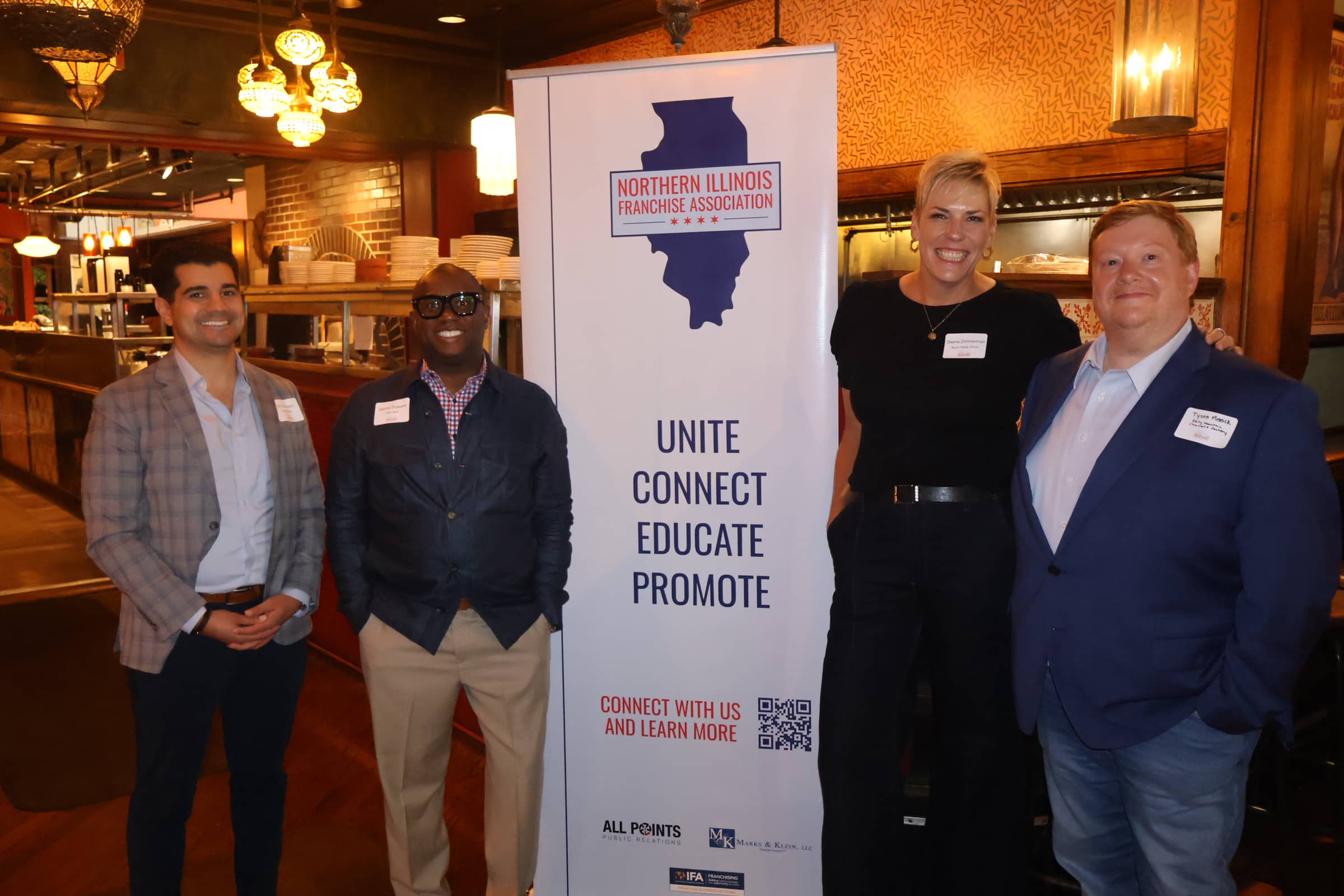
At the Northern Illinois Franchise Association’s (NIFA) Q3 gathering, franchise leaders brought their perspectives together for a candid discussion on “Positioning Franchise Brands for Growth.” Representing franchisor priorities, multi-unit franchisee ownership, real estate and lending, the panel explored what they’re seeing in today’s market and the decisions that can help set brands and operators up for sustainable growth.
The Right Site Requires Data, Patience and Discipline
In highly competitive markets like Chicago, finding the right real estate can mean looking well beyond the obvious available spaces. Deena Zimmerman, Principal at Baum Realty Group, discussed using mapping tools to evaluate heat maps, demographics, traffic counts and co-tenancy, while also looking two to four years ahead at developments that could create future opportunities.
With vacancy extremely limited in some high-demand neighborhoods, securing a strong location may require operators to identify where the market is going before space becomes available.
Tyson Minnick, Founder & CEO of Minnick Inc. and a multi-unit Rocky Mountain Chocolate Factory franchisee, reinforced the importance of remaining disciplined even when a location appears promising. He shared an example of walking away from a Seattle deal after identifying a one-year kickout clause in the lease. The lesson: growth should not come at the expense of sound real estate fundamentals, and every site and lease needs to hold up under careful scrutiny.
Strong Franchisees Are Built to Scale
While the conversation started with where brands should grow, choosing the right market is only part of the franchise development planning process. Identifying the right franchise partner is just as, if not more, critical. Eric D’Amico, Director of Franchise Sales at Panera Bread, explained that established franchisors such as Panera evaluate multiple criteria when considering a potential candidate. Financial capacity, operational execution, development ability and cultural alignment all matter when the relationship is intended to last for years.
For brands built around multi-unit development, that also means demonstrating the infrastructure to scale. D’Amico noted that many franchise brands across several categories may seek operators capable of managing 15 to 25 locations rather than a single or handful of units.
Having a franchisee like this, however, is not enough without the franchisor leadership and operational systems behind that individual or team to execute consistently across a growing portfolio. That same preparation extends beyond operations to how franchisees finance and capitalize their growth.
Capitalization Creates Room to Navigate the Unexpected
Garcia Dussard, SBA Business Development Officer at Celtic Bank, offered the lender’s perspective, explaining that three factors are especially important when evaluating whether a franchisee is positioned to grow successfully:
- The borrower’s experience
- The strength of the brand
- Adequate capital
While SBA financing may allow for a minimum equity contribution, he cautioned against treating the minimum as the target. Rising costs, economic shifts and slower-than-expected ramp-up periods can quickly put pressure on an undercapitalized operation.
That becomes even more important as franchisees add locations. Cash flow from existing units should support a thoughtful growth plan rather than expansion getting ahead of profitability. For prospective franchise investors, the takeaway was clear: access to financing can enable growth, but sufficient working capital gives operators the flexibility to sustain it.
Pressure-Test the Plan Before You Grow
Whether evaluating a site, financing a new unit or planning a larger development pipeline, the panel repeatedly returned to the importance of validating assumptions before committing capital. Zimmerman described combining market data with Average Unit Volume metrics when evaluating what a location can support. And Minnick takes a hands-on approach, building detailed spreadsheet models around local costs and testing a series of best- and worst-case scenarios. Larger franchisors can add another layer of insight through their own performance data and site-selection technology.
D’Amico also encouraged prospective franchisees to speak with multiple existing operators rather than relying solely on projections or the franchise sales process. Those conversations can provide a more complete picture of unit performance, operational realities and what it truly takes to succeed within the system.
Final Thoughts
The economic landscape continues to shift, with rising costs, evolving consumer behavior and new technology changing long-standing assumptions. But the panel’s discussion showed that uncertainty does not eliminate growth opportunities—it raises the importance of disciplined decision-making.
Taken together, the panel’s perspectives pointed to a more disciplined approach to expansion. For franchise leaders considering their next market or next unit, that means asking harder questions before moving forward:
- Does the site work under realistic assumptions?
- Is the organization equipped to operate at scale?
- Is there enough capital to absorb the unexpected?
- Has the opportunity been validated through data and conversations with people already operating in the system?
Thank you to our panelists—Deena Zimmerman, Principal at Baum Realty Group, Garcia Dussard, SBA Business Development Officer at Celtic Bank, Tyson Minnick, Founder & CEO of Minnick Inc. & Multi-Unit Franchisee at Rocky Mountain Chocolate Factory, and Eric D’Amico, Director of Franchise Sales at Panera Bread—for sharing their perspectives, and to Celtic Bank for sponsoring the Q3 NIFA gathering.
We look forward to continuing the conversation with the Chicagoland franchise community at our next NIFA gathering. Follow NIFA on LinkedIn to stay tuned for details on what’s next.